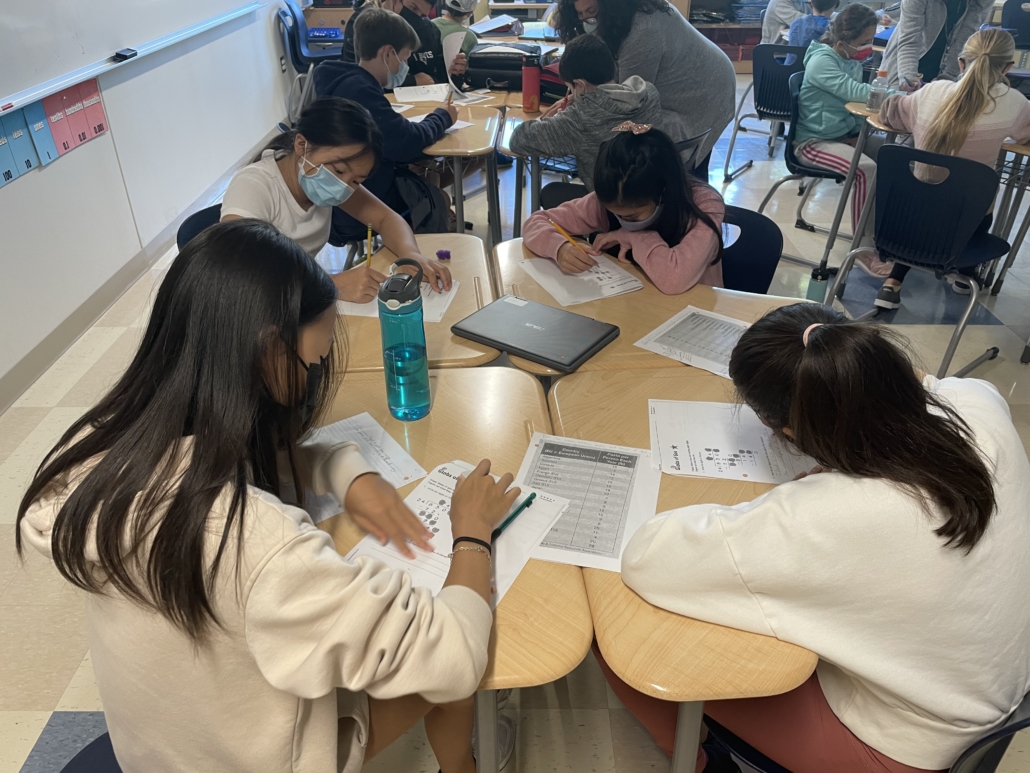




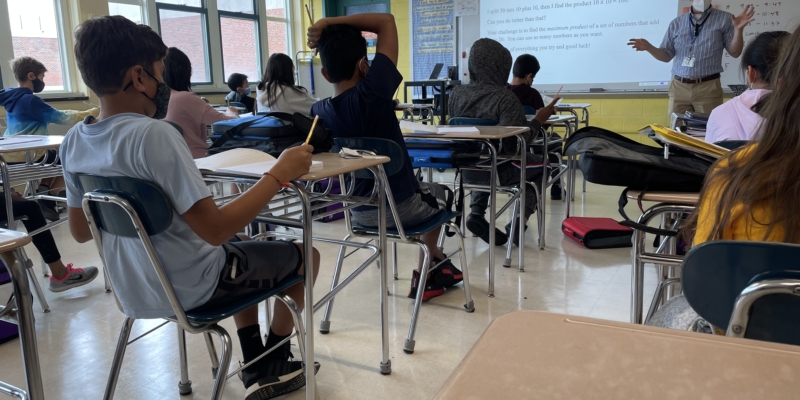
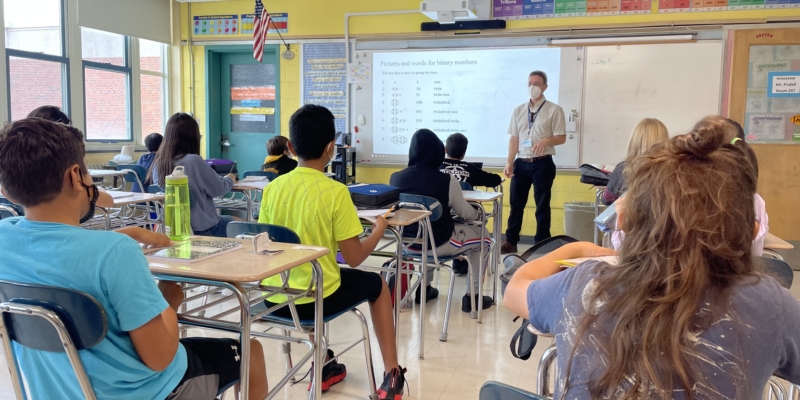
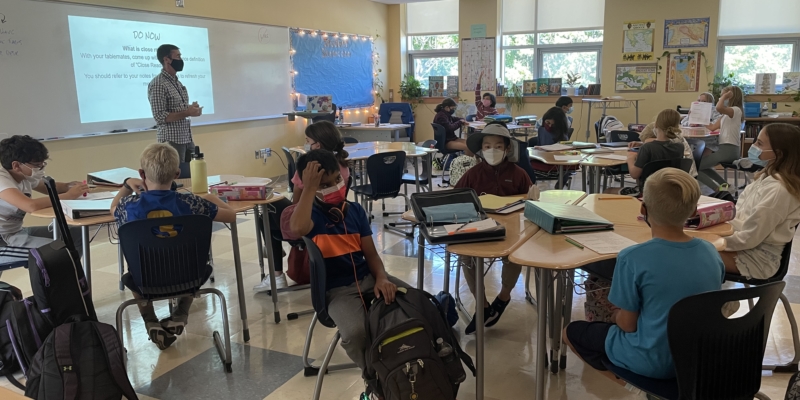
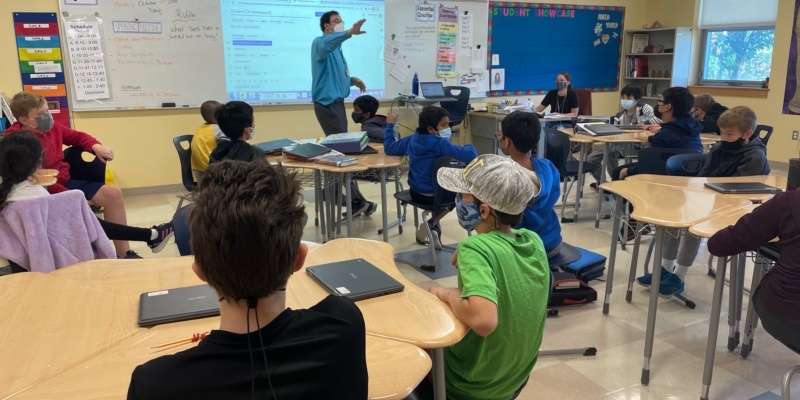
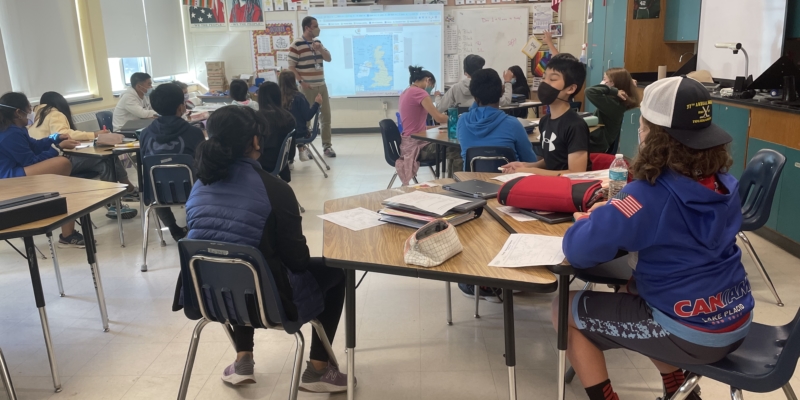
![]() Through the use of Microelectronics for All, students from Diamond Middle School and Clarke Middle School become aware of the great power and possibilities that modern technology has created. Students in the 6th, 7th, and 8th grades experience this program by doing problem solving exercises in real world situations. The solutions emphasize the process of systematic problem solving itself rather than answers. The program is divided into three sections consisting of Decisions, Counting, and Memory. The decisions module
establishes the ideas of input
and output, high and low logic levels, and how decisions
based on a set of conditions can be expressed
electronically. The decisions circuit board carries four
input and three output devices, as well as a NOT unit
(inverter), an AND gate, and an OR gate. There is also
provision for a remote sensor which allows feedback into the
system. The Counter Unit develops an understanding of the binary number system as well as the method for internal clocking of digital systems. The counter can be clocked manually by push button or by connection to a pulse unit on the board, the frequency of which can be varied. The 4-bit binary counter is connected to the Memory Module. The idea of "memory" is one of the fundamental developments underlying microelectronics. This Memory circuit board allows students to investigate what is meant by an address in memory, the data to be found there, writing data to memory and reading from memory. When used with the Counter Module, the memory chip provides two sets of 16 locations. Each of these locations can hold a 4-bit binary number. The address is displayed by the LED's on the Memory Module. Four slide switches and a 'push-to-write' switch allow new data to be entered into any selected memory location. This data is also available at an edge connector, so that the Music and Movement Modules can be controlled by the combined circuit boards. |